Bringing Your Own Fabric: What 'Appropriate Quality' Really Means
A fabric can be beautiful and still be wrong for the job. Here's how to tell before you buy yards of it.
October 16, 2026 · 4 min read
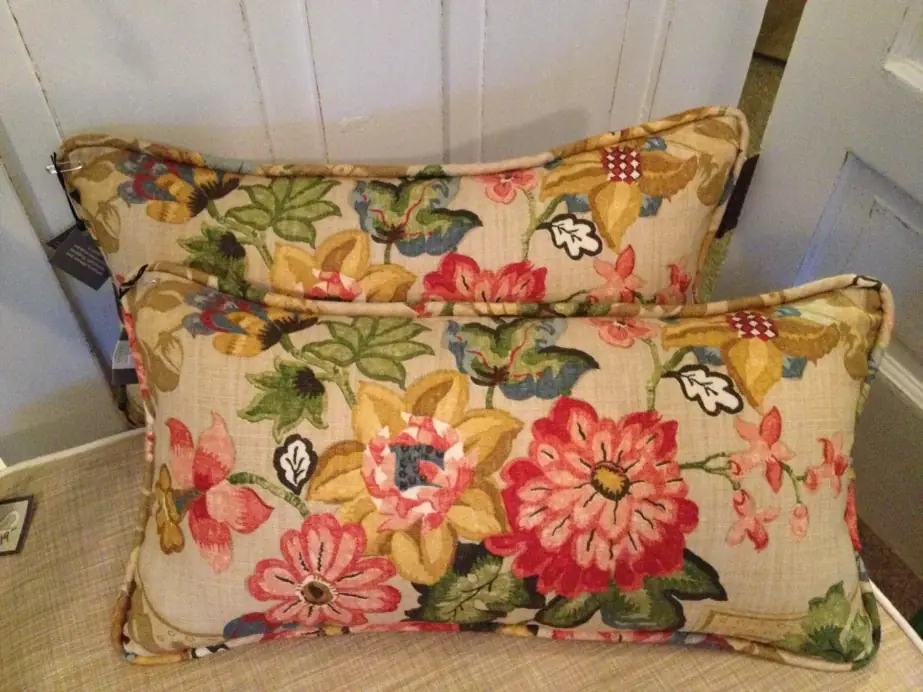
Sometimes you find the fabric before you find the workroom. It might be a remnant from a trip, a bolt on sale, or a pattern you saw online and couldn't stop thinking about. Bringing your own fabric is often a good idea, and at The Sewing Loft you can choose from the shop's selection or purchase your own. The one condition is that your fabric has to be of appropriate quality for the application. Here's what that means in plain terms.
Fabric is made for a purpose
Cloth isn't interchangeable. A lightweight cotton that makes a lovely lumbar pillow cover would be a poor choice for a dining chair seat, and a heavy upholstery weave would hang like a board as a drapery. When a workroom says a fabric needs to suit the application, it means the cloth has to behave the way the finished piece demands.
Different projects ask for different things. Draperies need fabric that drapes: soft enough to fall into folds, stable enough to hold its length. Roman shades need cloth that folds crisply and stays flat. Upholstery needs strength, since the fabric is stretched tight over a frame and rubbed by people every day. Cushions and pillows need something that can take wear on seams and corners. Using the right fabric for the right job is what separates a piece that looks good for years from one that looks tired in months.
What to check before you buy
You don't need to be an expert, but a handful of checks will tell you a lot. Here's a quick rundown:
- Weight and hand: drape the fabric over your arm. Does it fall softly or stand out stiffly? Soft suits draperies, firmer suits shades and upholstery.
- Weave: hold it up to the light. Tight, even weaves wear better. Loose weaves can snag, stretch or let seams pull apart.
- Rub count: upholstery fabric is often rated by how many rubs a machine can give it before it wears. If a fabric is meant for seating, ask for the number. Dress fabrics usually don't have one, which is a clue.
- Content: natural fibers like linen and cotton feel lovely, while blends and synthetics often resist wrinkling and wear. Each has a place.
- Backing and finish: some upholstery cloth is treated or backed for strength. Some decorative fabric isn't.
If you're unsure, ask where the fabric came from. Fabric sold by decorator fabric houses usually states what it's intended for. Fabric from a garment store or a craft aisle is usually designed for clothing or quilting, and may not be a fit for furniture or windows.
Pattern repeat and how much to buy
Pattern is the detail people forget. A pattern repeats at a set interval, and the length of that repeat affects how much fabric you need. With a small repeat, there's little waste. With a large one, a lot of fabric is cut away so the pattern lines up across seams, on a chair back, or between two panels at a window.
That's why it's wise to find out the yardage before you buy. Buying too little leaves you stuck, and the next batch may not match the dye lot. Buying too much is expensive. The Sewing Loft does fabric yardage calculations as part of its window treatment and cushion work, so the best time to bring in a sample or call with the details is before you purchase.
Sun, color and care
Two more things deserve a check. The first is colorfastness. Strong light fades some dyes surprisingly fast, so a bright print on a south-facing window can lose its punch in a few seasons, particularly without lining. Ask whether the fabric is rated for light, and consider a lining either way. The second is care. A fabric that must be dry-cleaned only is a harder fit for a family kitchen chair than one that can be spot-cleaned. Think about where it'll live and who'll be using it.
When to use the shop's fabrics instead
Your own fabric isn't always the best route. If you aren't sure about weight, durability or yardage, using a fabric chosen for the project removes the guesswork. The shop has a wide array of fabric and trim samples, and its site links to fabric houses including Kast, Master, Maxwell, Luxury and Mitchell. Many people mix: the shop's fabric for the upholstery, and their special print for the pillows.
Not sure about a piece of fabric you already own? Bring a swatch, or call or text 513.324.7941 and describe it. You can also stop by 2105 Lawn Ave. in Norwood, by appointment or by chance. Checking first is far easier than finding out later.
The Sewing Loft, 513.324.7941
Call 513.324.7941More articles
Measuring for Draperies: Why the Room Matters More Than the Tape
The numbers that decide how draperies hang are rarely the ones you get from a quick measure of the glass.
Roman Shade, Cornice or Valance: What Each One Does in a Room
Three window treatments that look similar in a catalog behave very differently once they're hanging in your house.