Roman Shade, Cornice or Valance: What Each One Does in a Room
Three window treatments that look similar in a catalog behave very differently once they're hanging in your house.
October 16, 2026 · 4 min read
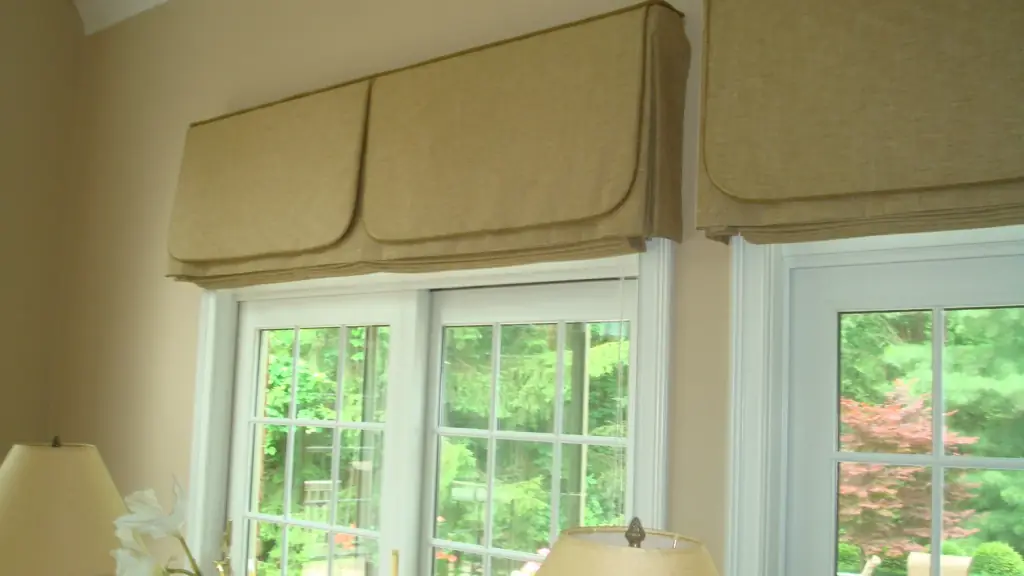
Walk through any fabric showroom and you'll hear the same three words over and over: Roman shade, cornice, valance. They're easy to mix up, since all three sit at the top of a window and all three are made of fabric. But they do different jobs, and picking the wrong one is one of the more common reasons a finished room feels slightly off. Here's a plain-language guide to what each one is, and when it earns its place.
Roman shades: the working treatment
A Roman shade is a fabric panel that lifts and lowers. When it's down, it covers the window as a flat, tailored surface. When it's raised, the fabric folds up neatly in horizontal pleats, stacking at the top. Because it's a real shade and not just decoration, it's the one of the three that can control light and privacy on its own.
Romans suit windows where draperies would be in the way: over a kitchen sink, beside a breakfast table, behind a desk, in a small bathroom, or anywhere a long panel would brush against furniture. They're also a good answer for a window you want to dress in a pattern without adding much visual weight, since there's only a single flat surface to look at. Lining is an important detail. A standard lining softens the light and protects the face fabric from sun, while a blackout or room-darkening lining is worth considering in a bedroom or nursery.
Roman shades can be mounted inside the window frame for a clean, built-in look, or outside the frame to cover trim and make a narrow window feel wider. Inside mounts need enough depth in the frame for the shade to sit properly, so that's one of the first things to check.
Cornices: the structured top
A cornice is a boxed, upholstered frame that sits across the top of a window. Think of it as a small piece of furniture hanging on the wall: a wood or board structure, covered in fabric, sometimes with trim, welting or a shaped bottom edge. It doesn't move, and it doesn't control light. Its job is to finish the top of a window, hide the hardware behind it, and add a crisp architectural line.
Cornices work especially well in rooms with a more formal or tailored feel, and in spaces where you want a strong horizontal line above a row of windows. A flat cornice over a bank of sunroom windows can tie them together visually. Cornices also hide the rod, the shade mechanism or the top of the draperies behind them, which makes them a natural partner for either. The main thing to consider is clearance: because a cornice is a solid box with some depth, there has to be room for it between the window and the ceiling, and it needs to project far enough to cover what's underneath.
Valances: the soft finish
A valance is a shorter piece of fabric hung across the top of a window, usually from a rod or a board. Unlike a cornice, it's soft. It can be gathered, pleated, scalloped, swagged or hung in a simple flat panel, and the style changes the personality of the room completely. A tailored box-pleated valance feels crisp. A swag with side pieces feels traditional. A short gathered one over a kitchen window feels easy and casual.
Like a cornice, a valance is mainly decorative. It adds color and pattern at the top of the window and finishes whatever is below it, whether that's a blind, a shade, or a pair of draperies. If you already have blinds you like, a valance is a good way to dress them up without replacing them. The tradeoff is that a valance on its own doesn't give you privacy or light control, so it's usually paired with something that does.
How to choose
Start with what the window needs to do, then think about how formal the room is. If you need to lift and lower coverage, a Roman shade is the answer. If you want a clean, structured finish over a window that already has a blind or shade, look at a cornice. If you want softness and pattern without much structure, a valance fits. Many rooms use two together, such as a Roman shade with a cornice above it, or draperies under a valance.
A few practical questions help narrow it down. How much wall is there above the window? Do you have radiators or furniture below? Does the window open inward? Are you matching other rooms in the house? Photos of the room are a good start, though seeing the space is better.
The Sewing Loft fabricates all four of these treatments: draperies, cornices, Roman shades and valances. Rose can talk through the options in your room if you call or text 513.324.7941, or you can stop by 2105 Lawn Ave. in Norwood, by appointment or by chance.
The Sewing Loft, 513.324.7941
Call 513.324.7941More articles
Measuring for Draperies: Why the Room Matters More Than the Tape
The numbers that decide how draperies hang are rarely the ones you get from a quick measure of the glass.
Should You Reupholster That Chair? How to Tell a Keeper from a Money Pit
A good frame can outlast three sets of fabric, and a weak one can't be saved by any amount of it.