Should You Reupholster That Chair? How to Tell a Keeper from a Money Pit
A good frame can outlast three sets of fabric, and a weak one can't be saved by any amount of it.
October 16, 2026 · 4 min read
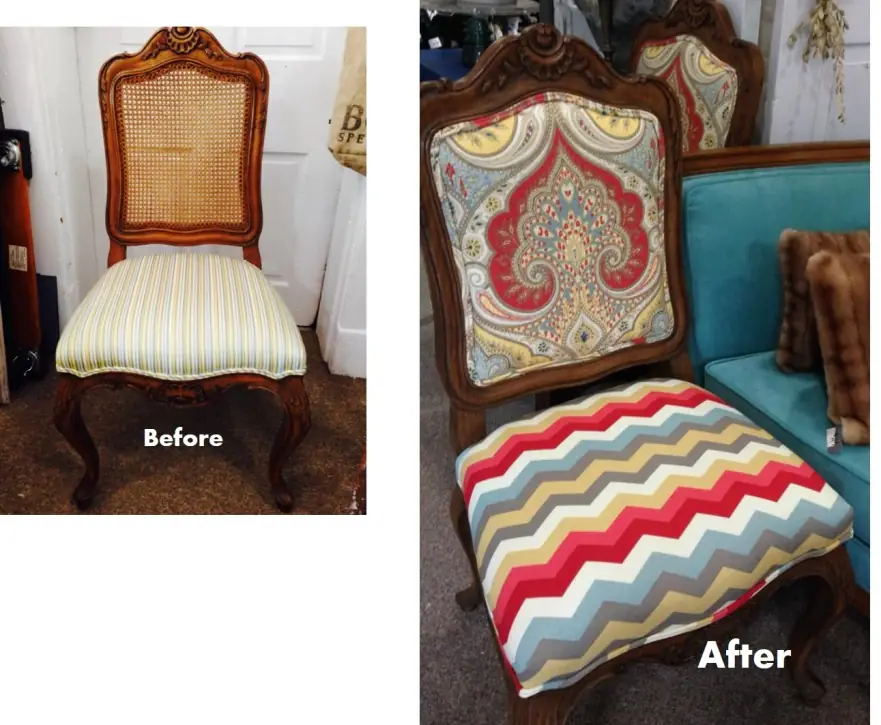
Almost everyone has a chair they can't quite let go of. Maybe it came from a grandparent, or you found it at an antique shop and it was perfect except for the fabric. The question is whether it's worth the work of re-covering it. The honest answer is sometimes yes, sometimes no, and most of the time it comes down to the frame underneath. Here's how to tell.
Judge the frame first
Upholstery is what you see, but the frame is what you're actually keeping. A well-built frame is the reason an old chair is worth saving, since older furniture was often made from solid hardwood with joined corners. A flimsy frame will fail again, no matter how nice the new fabric is.
A few quick checks you can do at home. Sit in the chair and shift your weight. Does it wobble, creak or rack from side to side? Lift one front leg an inch or two off the floor. If the whole chair twists, the joints are loose. Look at the legs and the rails for cracks. Press on the arms and back. A frame that's solid, even if the fabric is shredded and the seat is flat, is a good candidate. A frame made from thin particleboard or held together with staples and glue is usually not.
What's under the fabric
Re-covering a chair usually means more than swapping the fabric. The padding underneath wears out too. Foam compresses, old cotton batting gets lumpy, and springs can shift or break. When a piece is opened up, the workroom can see what condition the inside is in and decide what needs replacing so the new fabric sits smooth and the seat feels right. That's one reason a photo can only tell you so much, and why sending an image first is a useful starting point, not a final answer.
The Sewing Loft invites people to email a photo of their piece to info@sewingloftllc.com. It's a good way to start the conversation about what the chair needs.
Choosing a fabric that will last
This is where many re-covering projects go wrong. A lovely fabric that was designed for draperies or pillows isn't automatically strong enough for a seat. Upholstery fabric is built to take friction, which is why it's woven or backed differently. The industry measures this with a rub test, where a machine rubs the fabric until it wears, and a higher rub count generally means a tougher cloth. Without getting too technical, the practical points are these:
- A dining chair or a chair that gets daily use needs a tightly woven, durable fabric.
- An occasional chair in a reading nook can carry something more delicate.
- Pattern scale matters. A large pattern on a small chair can look chopped up, because the repeat doesn't fit the pieces.
- Think about sun. A chair beside a bright window will fade some fabrics faster than others.
- Pets and kids are real factors. Tight weaves and performance finishes handle them better than loose weaves with loops.
The Sewing Loft carries fabric suitable for upholstery as well as drapery, bedding, pillows and cushions, and its site links to fabric houses such as Kast, Master, Maxwell, Luxury and Mitchell. Looking at samples in person helps, because color and texture in a catalog or on a screen rarely look the same on a chair in your room.
Is it worth it?
Here's a fair way to think about it. If you love the piece, the frame is sound, and you want it to look different, re-covering is a great choice. You get a chair that fits your room, often built on a sturdier frame than a budget piece sold new. If you're lukewarm on the chair, or the frame is weak, you may be better off putting that effort toward something else.
A simple test: picture the chair in the room with new fabric. If you smile, that's a good sign. If your first thought is the cost, think about what a similar chair with a good frame would cost new, and compare the two.
Beyond the fabric
Some pieces call for more than new fabric. The Sewing Loft also does furniture painting with Chalk Country Paint, so a wooden frame that's seen better days can get a fresh finish at the same time as its new seat. A painted frame and a bold fabric can turn a tired chair into the best seat in the house.
If you have a piece you've been unsure about, call or text 513.324.7941, or stop by 2105 Lawn Ave. in Norwood, by appointment or by chance. Bring a photo, or bring the chair.
The Sewing Loft, 513.324.7941
Call 513.324.7941More articles
Measuring for Draperies: Why the Room Matters More Than the Tape
The numbers that decide how draperies hang are rarely the ones you get from a quick measure of the glass.
Roman Shade, Cornice or Valance: What Each One Does in a Room
Three window treatments that look similar in a catalog behave very differently once they're hanging in your house.